Friday, April 24, 2015

Athlete's Competitiveness Taken to the Limit

Many elite athletes are heavily pressured and put under stress to lose weight and/or get in better physical fitness shape by their coaches, peers, and the competitiveness of the sport.


In this post I will share information from the University of Adelaide, which is a reliable site and organization because of its knowledgeable authors, subscribers, and articles that inform readers about health and mental wellness. I will specifically discuss, “Elite athletes under stress to lose weight.”
http://www.medindia.net/
Why are the standards set so high for highly-achieving athletes?
Elite sportsmen and women are often pressured into going above and beyond with their sport with intense dieting, weight loss, and muscle building. "Most people in the broader community struggle with their weight, but for elite athletes it is an ongoing and precisely measured part of their daily working lives," says research leader Associate Professor Amanda Lecouteur. In order to compete at the advanced level that most coaches expect from their students and athletes, they’re forced to drastically change their daily lifestyles, eating habits, and exercise plans to accommodate the expectations set for them.


When do the pressures become too much?
"For example, having their skin folds measured is an important part of the day-to-day routine and a very big issue for many elite athletes.” states Mr. David Ellis, head Psychology researcher at the University of Adelaide, a highly accredited medical university. Their bodies are measured daily and they are under constant surveillance from their coaches. I believe that this kind of personal examination and stress is extreme and slightly unreasonable. If this is taken too far, it is sadly common that athletes get addicted to losing weight and not eating the amount they should, which could potentially lead to eating disorders or anorexia. thletes should prepare and perform at what level they believe they can, not at the level certain programs and coaches set for them.


Is this technique of physical and mental alteration effective in the performance of athletes? Is it worth it?

Results from athletes’ performances after working hard to fulfill the duties of their sports level of play have proven that it does pay off. For example, many wrestlers are hard on themselves and strive to achieve a lesser or greater weight to compete in a certain weight division. This type of physical pressure can lead to mental instability and insecurity about an athlete’s health and fitness.

Horoscopes: Fact or Fake?


Horoscopes are readings about someone's day that foretells what will happen and describe how their day will go. Astrologers base these readings off of the constellations known as Leo, Taurus, Pisces, Gemini, Virgo, Cancer, Aquarius, Capricorn, Libra, and Scorpio. Yes, there are other constellations such as Orion and Ursa Minor and Major, more commonly known as the The Big Dipper and The Little Dipper. The month and day of your birth determine what sign describes your personality. Some people say that these are useless superstitions that are used to make people feel better. Other people believe that these are a religion that are actual prophecies. What determines whether these are real or not? Absolutely nothing. Everyone believes in what they believe in. It is like asking an agnostic man to prove to a Catholic that God doesn't exist. It is all about faith. These star signs can be taken seriously or not at all. It all depends on what the person believes.


http://www.erinpavlina.com/blog/2013/11/are-horoscopes-real/

Why are Sports so Important?

Why are Sports so Important?
Sports aren't just games that prove how good you are at something. Sports help you achieve many amazing things in life. People who play sports sometimes do it for the fun and making new friends, but some use it as a way to get good at something and possibly use it to help build their future. In the article The Importance of Sports, Dr. Sylvia Rimm talks about how important sports really are and the impact it has on athletes.


In this article, it talks about how sports result in achievements. For example, sports  produce how a person can play the game and their ability to have the right mindset. Athletes discipline themselves by planning out their schedules and attending practice in order to get better and learn more about their sport. In the article, Dr. Rimm also shares how competitive our society is and that sports has a huge part in that. It helps people have something they can work out and something that doesn't always have to include book smarts. According to society, being smart means that you will most likely go very far in life. If you are good at sports in high school, you have a high chance at getting a scholarship which can help many families that can’t afford to send their kids to college. This article has helped prove that sports is important because it has given so many opportunities to so many kids in the world and has changed their lives.


Another important factor in sports is the confidence that kids build. Once they find the sport they are good at, they can then express themselves and not be afraid to show their talent. Some parents and friends might think that their athlete would never become who they worked to be. After they realized how much time and effort they have put in, they were amazed at how well achieved their child and friend has become. Being good at sports sometimes comes naturally to some kids. On the other hand, some have to work twice as hard as those kids in order to just be able to play the game. Hard work definitely pays off and helps you achieve greatness and success. This article has helped understand that having confidence in yourself can be the result from working hard and expressing themselves.


Sports has become such a huge part of my life and I wouldn't be the same person that I am now without it. This article has helped teach me more about the views of hard work and the amount of confidence you can gain.

Are We Thinking Too Much?

If you came to America, how would you feel if they wouldn't restricted you from doing certain things?


visanow.com
I believe that American lawmakers are harsh to illegal immigrants because they make restrictions against illegal immigrants and argue with our country's government over it.

Arizona law makers have proposed a package of immigration restrictions that might strike controversy in our country. Many of these restrictions make illegal immigrants mad because most of the restrictions are things that many people need. The Obama administration went to court to block this issue. All of the information from this blog post is from the article Arizona Lawmakers Push a New Round of Immigration Restrictions. This article was published by the New York Times. The New York Times is an award winning newspaper that is very popular.

Q: What restrictions are include in this bill?

A: According to the article illegal immigrants would be barred from driving in the state, enrolling in school or receiving most public benefits. Their children would receive special birth certificates that would make clear that the state does not consider them Arizona citizens. They are also not allowed to access schooling and the right to state citizenship but the Supreme Court is dealing with them. There was also a legislation that was passed that compelled police officers to inquire about the immigration status of those they stopped whom they suspected were in the country illegally.

Q: How do illegal immigrants feel about this?

A: The author claims that illegal Immigrants do not like this. There have been some revolts, boycotts, and accusations but none of them were a big deal. In Tucson, a community group was so enraged by what it called the extremist nature of the proposals from Phoenix that it proposed severing the state in two, creating what some call Baja Arizona. “Denying citizenship to children because they have parents without documents is crazy,” said the Rev. Javier Perez, a Roman Catholic priest and immigrant from Mexico.

Q: What has the government done about this?

A: The author of the article states that republicans have a majority in the Legislature, the restrictions on citizenship failed to win approval in the Judiciary Committee. The Obama Administration has declined these bills. Many state lawmakers are furious over the Obama administrations lawsuit challenging the restrictions. There has been no compromise over this issue.

After reading this article I learned that many lawmakers are very harsh, It is almost like they are jealous of the people coming to America. I think that we should just accept them because they do benefit our country.

What is similar or different about America's healthcare system compared to Canada & Europe?

Have you ever wondered the difference or similarities between the healthcare in the U.S. and the healthcare in Canada and Europe? Are we getting the best care we could in America or is it better elsewhere?  US, Canada and Europe have good quality health care. However, the Americans generally pay more for their healthcare and Europeans & Canadians have more access to healthcare. 


Well here is the comparison between the U.S. and Canada and Europe: 


Total health expenditure compared with the U.S., Canada, Europe. 

According to some of the facts in the Health Journalism.org, the two countries had similar health care systems before Canada changed its system in the 1960s and 1970s. The United States spends much more money on health care than Canada, on both a per-capita basis and as a percentage of GDP. In 2006, per-capita spending for health care in Canada was US$3,678; in the U.S., US$6,714. The U.S. spent 15.3% of GDP on health care in that year; Canada spent 10.0%.[5] In 2006, 70% of health care spending in Canada was financed by government, versus 46% in the United States. Total government spending per capita in the U.S. on health care was 23% higher than Canadian government spending, and U.S. government expenditure on health care was just under 83% of total Canadian spending (public and private) though these statistics don't take into account population differences. 

The U.S.: 

  • In the U.S.; they generally pay more for the medical healthcare systems there. 
  • Some people, compared to Canada, have more unmet needs than those in Canada. 
  • The uninsured Americans are lagged behind. 


Canada:

  • In Canada, they don't pay as much as the U.S. for the healthcare systems there. 
  • In Canada, they have fewer unmet needs, compared to the U.S.
  • Canadians have universal access to publicly funded health care services, primarily physician and hospital services. 


Europe:

  • The people are not worried as much as the Americans about losing their insurance; because of their healthcare systems. 
  • The U.S. has the highest overall spending rate; and the lowest percentage of the population covered by government programs.
  • In Europe, they have a higher average number of percentage of physician visits than the U.S.. 

FUTURE RESEARCH: What can the US do to make healthcare more affordable and accessible to more Americans? 

Future technologies and their capabilities.

To better understand how technology will affect / change in the future I researched futurist ideas, the theories of what will happen in the near future. In an article, written by George Dvorsky, he argues that artificial intelligence, man-made organs and robots will be the most likely to have an impact in the future.

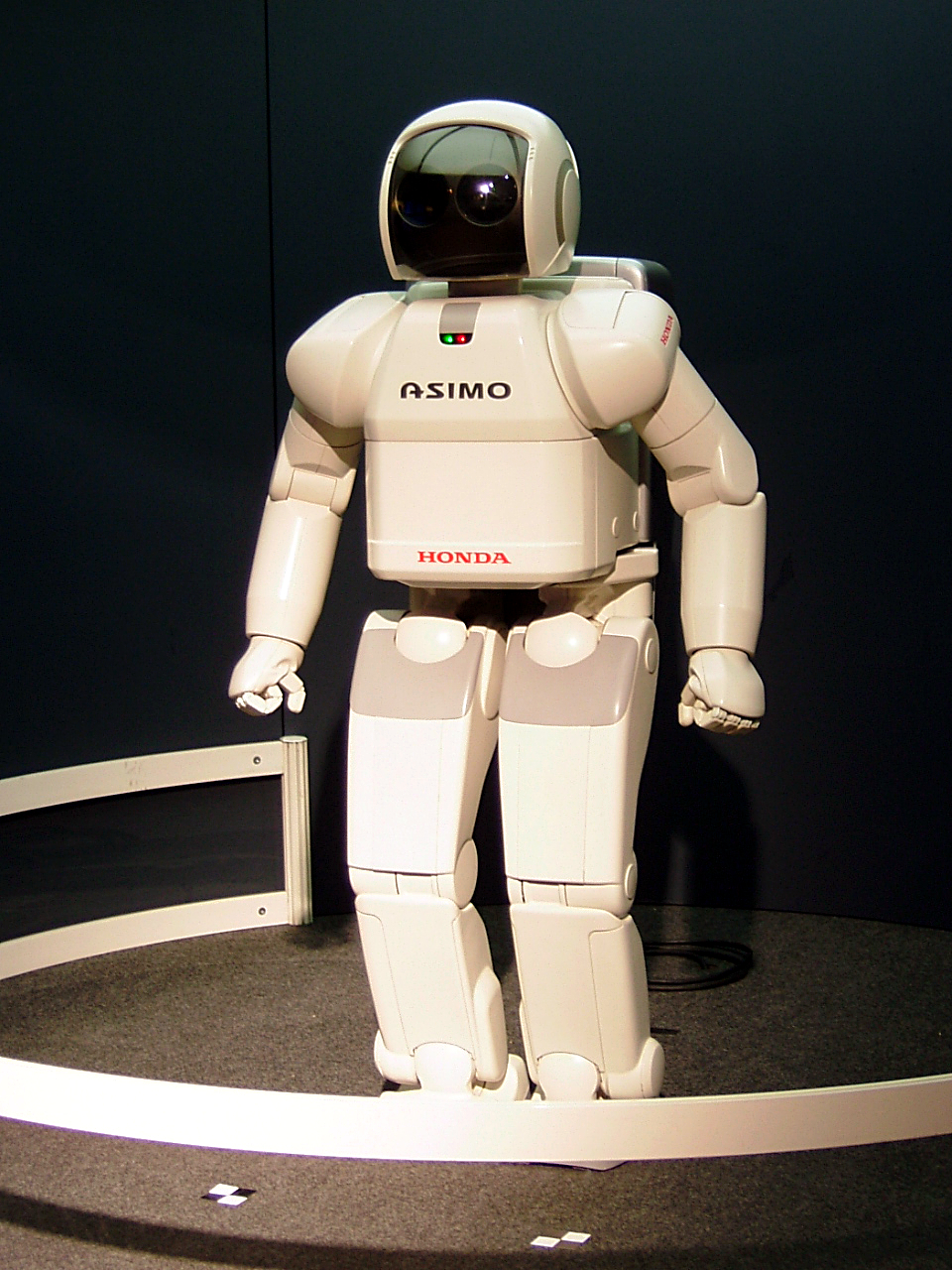
The first idea was artificially intelligent robots, which are expected to have completely learned the English language, making conversations with a robot possible. There are some being made to be duplicate of the owners, being a virtual copy of who you are. Some people are scared at the thought of robots making decisions for us, which for any technological item, may make a mistake, and we would be accountable for what they would do.
http://upload.wikimedia.org/
Another future idea is that an anti aging genetic change might be created, in the article it suggests that by 2030 a vision would be at least be shown. Anti aging technology might sound exciting and futuristic to some, but in my eyes it is kind of scary. To think that people would be able to willingly to extend the age of their lives would be a hard thing to contain, it would probably be very expensive too.

A third technology that has a foresight for the future are law abiding robots, who would be able to arrest, even kill, those who betray the law. Something else which is scary to think of, especially comparing against movies like Terminator, of course it would allow for a more lawful environment but it would still be terrifying to think of what they would be capable of doing, especially scary of thinking what would happen if these would malfunction, thinking of a robot against human war is fun to think about. But above all else which is easy to believe, the only thing that is very predictable are man made human organs. This is a technology that we need, although it does basically make someone into half robot half man, it is good to think that donating organs would be set aside for another option.


What technology was seen futuristic 60 years ago but now that is invented, is useless?

On Sale Vs. For Sale

Why can we simply buy what we need? There are too many factors that fall into play while thinking about the different choices. Before making a final purchase, ask yourself, “what brought be to get this item?” The reason you bought something can be simply out of habit, because we saw someone else buy it, and finally because people are naturally impulsive.

The reason we buy certain products can be directly linked to the habits we've formed, what others around us have and how impulsive we are. My research was found at Psychology Today.


 Image found Here.


Habit plays a very large role in not just what we get, but what specific brand of that item we get. The first time you go to a store by yourself to get groceries, what kind of bread do you get? Do you get the new fancy loaf? Or do you get the same kind of bread you grew up on? This kind of habit is called inertia, or a resistance to change. According to Psychology Today, this habitual style of buying comes in two forms, inertia and basic repetition. I know that my mother always gets bananas from the store out of habit because we never eat bananas and yet she comments on how she should stop buying them because they go bad before anyone wants any. Next time she goes to the store she still get bananas.


Buying things we see other people have or we see them buying. In a sense it is almost childish to want something just because someone else has it. Back when the Wii was a brand new console and all my friends had it. I would hear them at school talking about it and what games they had and everything along those lines until I admittedly became jealous. My sister and I practically begged my mother to get it for us. Four years later and we sold it because no one was using it. This sense of others influencing others can happen right at a store. Someone buys a new brand of candy at the checkout line and states how much they love this new candy and then chances are, you will try it too.


Impulsiveness is not something you can learn to become, you either are or aren’t. Just like being outgoing, impulsive people are more likely to buy all sorts of foods just to see what tastes best in soup. A not impulsive person would more likely follow the cookbook and buy exactly what they need for the soup. It is producers jobs to target the impulsive people to grab their item off the shelf and indirectly influence the not impulsive people to try something new.
With all these different ways for companies to get to a buyer, that buyer may even feel overwhelmed by all the choices. This can be solved with customer service. It is a little weird how everyone who works there just so happens to like the brand that is getting the store the most money. If a customer service person recommends a certain brand of food, it would be awkward to not get what they recommended. This all ties back into the idea that buying and selling goods have many different sides and back alleyways to get a customer to buy your product.


Sunday, April 19, 2015

D-day, 1944

Imagine planning an event for more than a 100,000 people---could you do it?

According to the video created by PBS, D-day was one of the most complex operations in military history which required significant planning and the use of sophisticated weaponry. 

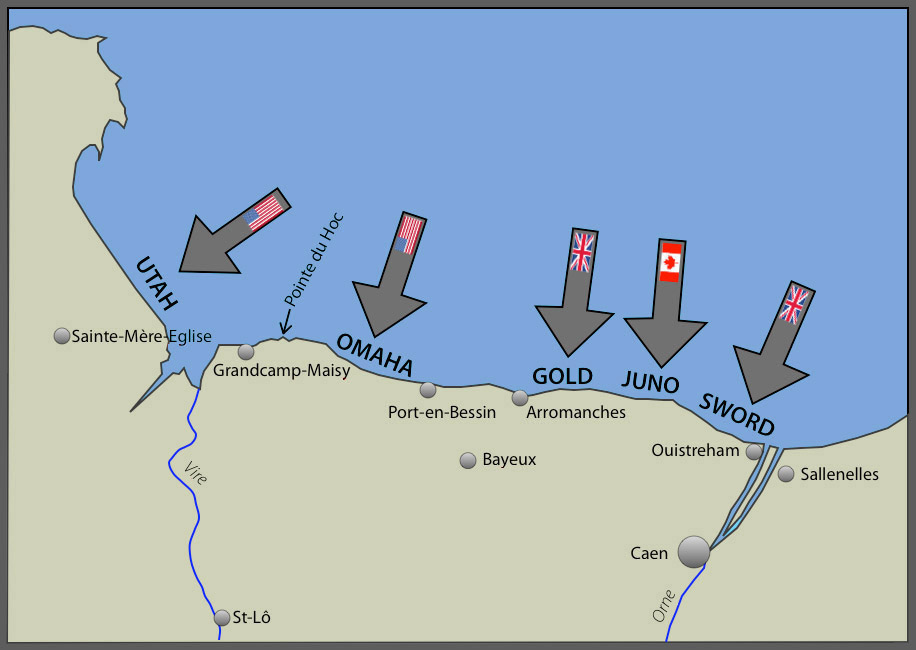
Source: http://mstecker.com/images/Europe/france2011n/map-d-day2d.jpg
          D-day, or Operation Neptune, took place on June 6, 1944. Around 160,000 allied troops were against 40,000 German troops, which was caused overload. The troops were split up to different sections onto the beach front. The front was split up into five different sections. Utah (U.S.), Omaha (U.S.), Gold (Great Britain), Juno (Canada), and Sword (Great Britain). Omaha was the heaviest defended and the U.S. troops going there were known as the 'Suicide Wave.' Germany was occupying Normandy, France. Allied troops were crossing the English Channel in 5,000 ship vessels. The plan to invade Normandy was very complicated, and took many months to plan.

         The allied troops would run into many obstacles, many they could overcome, but there were a few that caused quite a few other issues. For example, the vessels would run into what they called the Devil's Garden. The Devil's Garden was located right on the shore and was made to prevent ships from getting closer to the beach. To avoid these obstacles the vessels were planned to arrive during low tide.

However, an obstacle they could not avoid was Hitler's Buzzsaw, or MG-34. At the time, it fired twice the rate of any other weapon on the planet. Another setback they faced was low cloud cover. The low cloud cover made it hard for the bombers to see. Since they didn't want to bomb any of the vessels or their own people they held off on dropping the bombs. However, every half-second they waited to drop the bombs they were a 100 feet off their original target. The bombers' job was to help take out the tanks on Omaha beach, but since they missed by a great amount the troops had an even harder job than they already had. Despite the issues they faced D-day was made a success on June 30th, 1944, when the Allies got full control over Normandy.

FUTURE RESEARCH: How did the bombing of Pearl Harbor affect U.S. involvement in the war?

Friday, April 17, 2015

What would you do without an arm?

https://encrypted-tbn2.gstatic.com

Could you imagine not having an arm?

Imagine having such a great talent that you live for and work at everyday and one day you lose a special part of it that helps make you talented. In the article  “Bethany Hamilton: Soul Surfer”, Bethany Hamilton experienced a horrible tragedy and then found her way to overcome it make something great out of it..


Bethany Hamilton survived after being bit by a shark while she was surfing. Her left arm was taken off making her life change instantly. Bethany is a professional surfer who was training to compete in the finals and then this horrible tragedy happened to her and she’s living with her challenges to this day. Bethany started learning to surf at age five because of her parents. She lived in Hawaii, which is the best place to surf. She entered her first surf competition at age eight. Bethany has always had a connection between surfing and her relationship with God and Jesus Christ. As Bethany said in the article, “I just kind of grew up with an amazing lifestyle of knowing God and having a personal relationship with him and being able to surf some of the best waves in the world.” If Bethany didn't have God, she wouldn't be able to live the experience she is living now.

In the article it described how now she has a movie and her own book out that describes her journey. After losing her arm she had to wait a week before she could get back in the water. It was definitely a challenge not being able to use her left arm. Surfing involves you getting up on your board with the strength of your arms. She had to learn how to just use her right and she did! Bethany Hamilton is a great example of a professional athlete who had something terrible happen to her and it affecting her life greatly because of the loss of the thing she needed most. She found a way to overcome it and work around it.
My research for the future would be to find out more about the lives of professional athletes that have had their lives changed and impacted.

What's really happening with TV?

What about T.V. is affecting teens?


The biggest danger of TV that is affecting teens is the amount of TV that teens are watching. “The average teen is watching 28 hours a week of television.” -Reality TV’s effect on teens. This would mean the average teen watches more hours of TV then the hours they spend at school! This is a huge problem, because this would mean that people are using a lot of time ,that they could be using for something else, on watching TV.


What is the worst type TV for teens?


Reality TV. Reality TV is by far the worst type of television for teens because it can change their state of mind. If they think the things in the show are normal then they will try to do the things they do. The way people act in reality TV is very corrupted. Teens shouldn’t be exposed to that much negative commentary and bad language. These shows can also support drugs and alcohol which can definitely influence teens behavior.


Should teens never be exposed to the television?


No, a lot of the things that children and teens are exposed to on the television are educational. These lessons help the teens grow and become a better person. Also it’s what the kids are watching is what is most important.


Question: What do you think is appropiate for teens to watch?

How TV Can Affect a Teen's Grades

Thursday, April 16, 2015

If the World Truely was 100 People

The website 100people.org has put a new meaning to how unequal and unfair our world really is.  This article shrinks the world to 100 people and then talks about how many out of the 100 are affected by life.  Gender, poverty, money, nutrition, and living conditions are all talked about.  The results are amazing.  Out of the 100 people only very few have privileges and many are in need of aid and help.  


1.“87 would have access to safe drinking water
13 would use unimproved water”
This is really scary because I think all people should have access to clean and sanitary water sources.  Because of this many diseases spread and hygiene is almost nonexistent in low-class countries.  


2. “88% of males would be able to read and write
12% of males would not be able to read and write”
Education should definitely be a priority to all because it gives a chance for people from poor backgrounds to become something more in their lives.  


3. “79% of females would be able to read and write
21% of females would not be able to read and write”
Is also can go back to the debate of gender.  Why are women less likely to be educated than men? All women should have the same opportunities and life expectancy as men.


4. “15 would be undernourished”
It is crazy to think that so many people don’t get enough food to eat, while many people in the U.S. are obese and go on diets to be skinny.


5. “78 would have electricity
22 would not”
Bringing electricity to those far away from big cities is key to connect the world with EVERYONE.


www.clker.com


6. “48 would live on less than $2 USD per day”
This is much less than minimum wage in the U.S. and almost 50% of the world has to live like that.  $2 dollars wouldn’t buy anything in the U.S.  A fruit cup in the cafeteria is $2.25…


7. “65 would have improved sanitation
16 would have no toilets
19 would have unimproved toilets”


8. “75 would be cell phone users
30 would be active internet users
22 would own or share a computer”


9. “1 out of 2 children would live in poverty”
No child should ever even experience poverty.  It is dangerous and they grow up without a childhood.  Many people don’t know the risks and tolls it actually can take on a growing child.  


10. “7 would have a college degree”
This shows how much access we actually have for a higher education.  93% of people in the world do not attend college.  This can determine people’s jobs and salaries, which impact their and their families lives.  

Sunday, April 12, 2015

A Glimpse into India's Fashion Future


http://www.desiblitz.com/
Desiblitz, a well respected and famous fashion blog states that Indian fashion has changed over the years by respecting their old traditions but still diving into more modern cosmopolitan type looks. India’s designers publicize a European look and traditional look to please all the extreme’s of a young women religion or jump into a more current and upcoming fashion.


A European look would entail more pizzaz and bright flashy colors. Something cool about most Indian clothes are they happen to made of lightweight materials such as silks and other materials similar to that. Designers use these materials because it is so hot in India. This interests women who cover because those ladies still want to be fashionable and comfortable even when clothing is covering the majority of their body!
http://www.desiblitz.com/


http://www.desiblitz.com/


A traditional look would involve a more modest dress. In India’s case it trying to create beautiful and colorful headdresses or hijabs, as they are commonly known as. In another country such as the U.S you wouldn’t see as much market for hijabs because we have a good amount of Indians in our country but for sure not the majority like India bestows.


topnewstyle.com
eventsstyle.com
“Similar to international fashion destinations like Paris and Milan, India’s two big fashion house gatherings, ‘Lakme India Fashion Week,’ and ‘Wills Lifestyle India Fashion Week,’ host the fashion week that occurs twice a year. It acts as great platform for new designers and provides interested buyers from across the globe to make unique purchases. This influence has marked India on the international fashion map.”

Back in the day, India wasn’t considered fashionable. They were looked upon as different and not in among the fashion gods that decide the years new trends. Its impressive how India has changed over the years. They have become such a populated country with so many young fashion followers to invent the new trends.  

Why They Do, What They Do

The article I read is reliable. Because it shows the first hand experience of a man who is close the subject and is and intelligent person who is well edujated. Overall his veiws are smart and well thoughtout. Therefore this is a reliable source. 
Everything that happens, happens for a reason and this is true for theatre. Howard Shalwitz Is a Director at Wooly Mammoth Theatre. Before he found theatre he decided he wanted to be a doctor, then a Philosopher, and then a teacher. He tells us that him mother did not think that his career path was a good option, so he made a list of 7 reasons why theatre matters. His first reason is that no harm comes from theatre. This group of people do not encourage others, or get encouraged themselves, to partake criminal or immoral activities. Theatre is a healthy way to get out and get your mind off the problems in your life for a little while.
His second point is that people take things away from the shows and their morals. They are good ways to teach people various types of lessons about various issues. It also encourage people to be more imaginative in the way a child likes to imagine things. Learning and imagination are what make great people do great things. The third point Shalwitz makes is that theatre brings people together in way that is like no other. It is a positive way for people to have fun, get together, and be free to feel. It is a more intellectual and thoughtful experience that watching movies and television.
Theatre helps people to learn how to listen and talk in an argument or debate. It even has an impact on how we live in a modern democratic society. It also help us emphasize and empathize the hardships and struggles of others. All of these regardless of the show a presented in how the characters interact, because it is a writer's job to have realistic exchanges, despite the fact the both people would know what the other was going to say. In fact many playwrights have become democratic leaders. In South Africa playwright fought against Apartheid. His fifth point is that theatre helps to strengthen education and language skills. When a person is watching characters interact it requires quick thinking in order to understand what is happening. It also teaches people about history and different parts of the world that a person could learn about otherwise, but may be more engaged at the theatre. People who are involved in theatre also tend to do better in school.
The sixth point Shalwitz makes is that theatres can improve the economy of small neighborhood. In the cases of this, in New York, Studio Theatre, Shakespeare theatre, and many others. All of these helped open up restaurants, Jobs improved. Sidewalks were fixed, and many other things happened to help the neighborhoods. The last point he makes is that theatre can make people see the problems in their own lives and figure out how to make them better. He said he encountered a couple, who discovered they needed to go to counselling in order to improve their relationship. While this does not happen to everyone, smaller things can help people in their lives.
http://upload.wikimedia.org/wikipedia/commons/6/6b/Broadway_street_sign.jpg

I think it is true that no harm can come from the theatre. It is a healthy environment and in my experience it is a very kind and accepting group of people. It is a good place to go for anyone who wants to have a good time. It also does teach people good morals as many shows have that goal in mind. I have also found that the theatre does in fact bring people together. My family outside the state often comes together, as well as my friends to support me and allows me to meet other people. The theatre definitely does help with debates and understanding conversation. I can now speak better in conversations and stutter less, now that I am involved with theatre. I have learned many things from theatre that I wouldn’t have learned otherwise, for example, In Fiddler on the Roof, I learned more about the history of jewish culture than I would have otherwise. I have never thought of theatre to improve economies of the areas they are set up in, and I don’t know exactly how that works, but it seems to make sense. Most events that take place in shows are based off real events and it makes scene that this makes people think about their own problems and how to solve them. Overall Shalwitz seems to have the right Idea of how theatre affects people.

I've seen now how theatre effects people, but not how people effect theatre. That is what I plan to research that next.

Saturday, April 11, 2015

Ocean Pollution and its Detrimental Effects


Marine animals are getting caught in trash every day and dying, "small scale" oil spills are going unnoticed, and it is our fault. If ocean pollution is not addressed in a more serious manner, and soon, our whole planet will be in serious trouble and ocean countless species will be lost.  


      As many people already know, ocean pollution is a major problem that is plaguing the world’s oceans worldwide. However, many people do not really know the types of different pollution that are destroying these marine ecosystems. In the article "What is Ocean Pollution?", the author states the various causes of ocean pollution, which they say are due to sewage overflow, toxins and chemicals from industries, land runoff, large scale oil spills, ocean mining, and littering. Of course, each of these causes are detrimental to the marine life, yet some are causing more damage than others. In my opinion, littering, oil spills, sewage, and chemicals and materials from industries are the most severe causes of ocean pollution today. 

Littering is obviously widely known to be harmful to marine life, yet it is something many people know about and don’t really pay attention to. Sewage overflow is a very similar topic to littering, yet the sewage can be toxic to the ecosystem and creates bacteria in the water and around the shores where various types of marine life thrive. Animals living in the oceans are struggling to adapt to these harsh changes, and the populations of many species are taking a turn for the worst. While some species are not affected as greatly, many species are adapting in all of the wrong ways, which if not prevented can lead to serious issues in the future.

   
  The effects of the intensifying ocean pollution are taking serious tolls on the marine life that live in the oceans. As I previously mentioned, I think that toxins and materials from industries are extremely detrimental to the health of the animals. The chemicals and oil that are constantly being spilled into the ocean have serious effects on the wildlife, especially if nothing is done about it. Large scale oil spills usually do not unnoticed, and conservationists and marine biologists are almost always there to help the cause. But what about chemicals and other harmful toxins that spill into the oceans from nearby companies? 

While these may be accidents, they often go unnoticed, leaving only the animals themselves to notice. Toxins and oil that get into the water effect animals by seeping inside the gills of fish and getting smeared into the feathers of marine birds. “The long term effect on marine life can include cancer, failure in the reproductive system, behavioral changes, and even death” (“What is Ocean Pollution?”). Some negative behavioral changes among birds are the incapability to fly due to oil and other chemicals ruining their feathers, therefore some birds are no longer able to fly and get food as easily, so many are snacking on small creatures found near the shores since they cannot dive into the water for fish. This is one adaptation that is very small scale, yet it could affect future generations and is already harming the food chains. 

The marine food chains are in great danger because due to littering and agriculture from companies being spilled into the water. “These chemicals do not get dissolved and sink at the bottom of the ocean” and small animals become curious and eat the spilled agriculture and litter because it is easier to eat right away than to hunt for food (“What is Ocean Pollution?”). The bigger issue of the matter is that once those small animals get eaten by ANOTHER predator species, that predator ingests the same chemicals as well, which again, can lead to cancer, other internal conditions, and most commonly death.


                            SOURCE: https://s-media-cache-ak0.pinimg.com/
  
   I think that ocean pollution is a very severe problem that we are sadly facing, and it needs to be paid more attention to, not simply by marine biologists and conservationists, but by the whole world. We use the ocean water and so many fish and other animals in our daily lives, and if action is not taken to end the pollution, we will not have the access to the oceans that we have always had. A few years ago, I remember reading a very sad article about a baby sea turtle that got caught in a plastic soda ring. As the turtle matured, its shell and skin grew around the plastic, and the plastic was then embedded in the turtle. When the plastic was cut out, the body of the turtle remained forever in the same shape. The turtle itself survived, but countless other animals and turtles get caught in plastics and other man made materials and die. Also many sea turtles have been reported dead from ingesting plastic bags in the ocean, mistaking them for jellyfish. It is things like this that we do not pay attention to, and when people do, it usually is a major headline story on the news. We have to act quickly, or the ocean and the ecosystems inside it could vanish right before our eyes, being our fault for the littering and pollution that are hurting our planet.


Friday, April 10, 2015

Why Nuclear Weapons May Be Keeping us Safe


Nuclear bombs pose a serious danger to our world today, but do they protect us in any way? In this essay I will discuss the question - Do nuclear weapons make our world safer or more dangerous? I found the information in this post from a blogging website made by the United States, people from anywhere can post their ideas on to it, and the people on here have a wide variety of viewpoints on nuclear weapons, and not much bias because they are all bystanders of nuclear weapon production. In this post, I will argue that although having some nuclear weapons has deterred violence, the high number of nuclear weapons and the power they hold has created an unsafe environment.
http://www.troymedia.com/

Have Nuclear Weapons Deterred Violence in the Past?
One writer talks about how Nuclear Weapons are the ultimate war deterrent, he brings up the example that war with the aggressive Soviets may have been unavoidable without the power given by nuclear weapons. I agree with this idea that the power of nuclear weapons gives the holder a strong influence on those around him/her. In the United States case we were safe with that power, but other countries may not be as responsible, and may mistreat the power of Nuclear weapons. Another Writer, Zarkov, disagrees with the first saying that our nuclear arsenal failed to prevent 911, and missiles on Cuba. I disagree with this because in thee cases there was no way we were able to use our nuclear weapons to defend ourselves from a radical group. But when you think about this you see the problem that only large-scale attacks from countries could be defended with nuclear weapons while the ones we are dealing with now (small-scale) are not well-defended with Nuclear Arms.

What Risks have they Posed to the World?
Nuclear weapons pose a very dark possibility to the world. One writer defends the fact that sixty or seventy nuclear weapons mounted on missiles could wipe out the largest or most populous countries in a matter of days. Seeing that there are around 10,000 nuclear weapons around, world-destruction is possible without even thinking of the after-effects of nukes. I think that the possible outcome of Nuclear war is too scary to go on with, especially with the amount of tension between countries with nuclear weapons. There aren't only the possibilities of purposeful detonations, but also accidental ones with the same catastrophic effects. With so many things that could go wrong we have no reason to continue to live under the stress of having these bombs around.

What Should the Outcome of the Nuclear Debate be? Leave them be, or work to Rid the World of them.
If a group of people were to accomplish the great task of getting all the countries to bring their nuclear weapons together to destroy them once and for all, it would be a miracle. With so much tension between countries it would be tough to get everyone to come together and give up their most powerful asset. It would just be easier to only regulate the control of Nuclear Weapons from a neutral organization. If we were able to limit everyone to an equal power level, and number of nukes, it would end any arms races, and keep everyone in check. If we were to just leave the Nuclear Situation how it stands, many countries would keep trying to produce better, bigger weapons and eventually something, an error might happen that could trigger a very dangerous war.


Future Research: Government Regulations and Technology